Why do leaves change color in the fall?
The yellow was there all summer, hiding. The red is brand new. Here is what the tree is doing as the nights get longer.
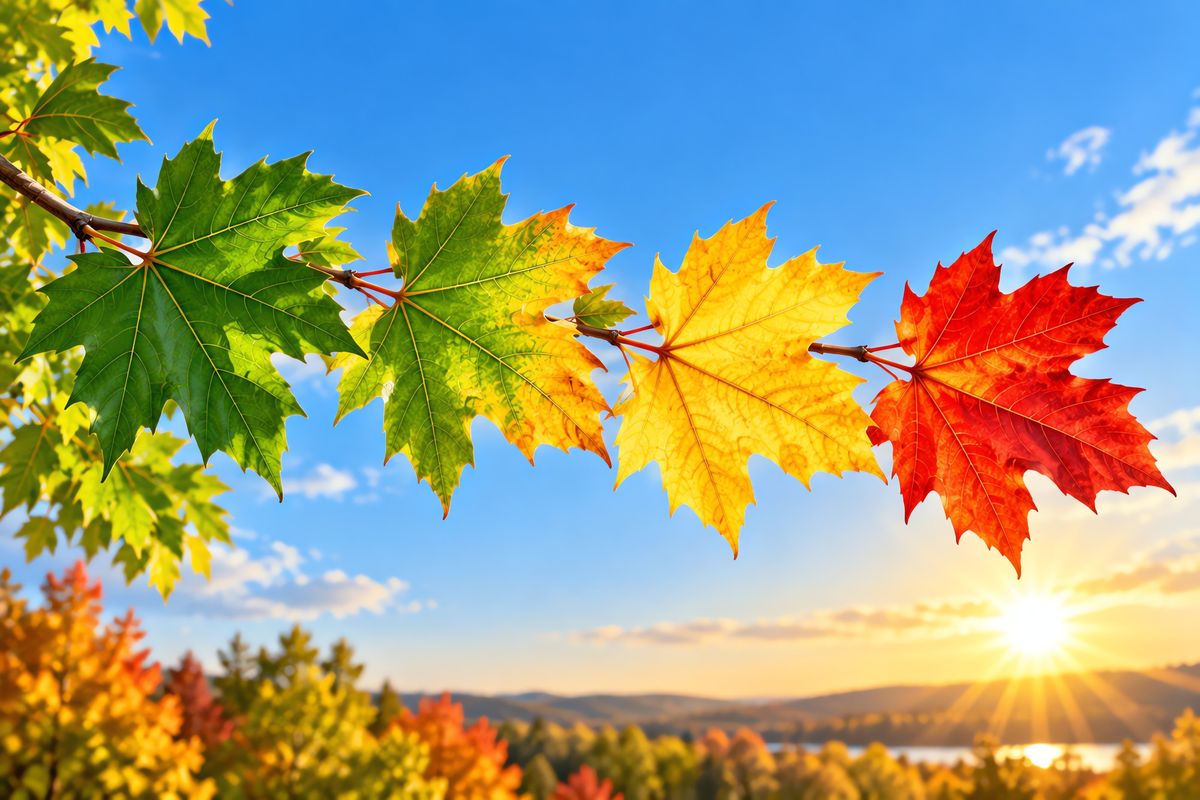
All summer, a leaf is a tiny food factory. Chlorophyll, a green pigment, soaks up sunlight and uses it to turn water and air into sugar for the tree. Chlorophyll wears out quickly, so the leaf keeps making more, and the leaf stays green.
Chlorophyll is not the only pigment in the leaf. Yellow and orange pigments called carotenoids (the same family that makes carrots orange) are there all year. There is just so much green that you cannot see them.
How it works, in 3 steps
1. Longer fall nights slow chlorophyll making. The main signal is not cold; it is darkness. As the nights grow longer in September and October, the tree senses that winter is coming and slows, then stops, making chlorophyll. A layer of cells at the base of each leaf begins to seal it off from the branch.
2. The green fades, revealing hidden yellow and orange. The old chlorophyll breaks down and is not replaced. As the green disappears, the carotenoids that were hiding all summer show through. That is where the yellow of aspens and birches and the orange of some maples comes from.
3. Some trees make new red pigments from sugar. Maples, sumacs and some oaks go one step further. Sugar trapped in the sealed-off leaf is turned into brand-new red and purple pigments called anthocyanins. Warm, sunny days and cool nights that stay above freezing make the most sugar, and so the brightest reds.
In the eastern United States, the color usually starts in New England in late September and rolls south for about six weeks. Every year is a little different: a warm, wet fall gives softer colors, and an early hard frost can kill the leaves before the reds develop. Once the leaf is sealed off completely, it falls, and the tree spends the winter bare, living on food stored in its roots and trunk.
Myth or fact?
“Frost paints the leaves their fall colors.” Myth. Cool nights above freezing make the best reds. An early frost actually weakens the colors by damaging the leaf before the pigments form.
“Wind is what pulls fall leaves off trees.” Myth. A special layer of cells grows at the base of each leaf and cuts it loose. Wind only finishes the job for leaves that are already ready to drop.
“Every tree turns red in the fall.” Myth. Aspens turn golden yellow, beeches light tan, and red maples brilliant scarlet. Each kind of tree has its own recipe of pigments.
- Go outside and collect three leaves from the same kind of tree: one still green, one half turned, one fully colored.
- Line them up in order and look at the half-turned leaf closely. Where is the yellow appearing first: at the edges, between the veins, or at the tip?
- Hold the green leaf up to the light. Can you spot any yellow peeking through where the green is thinnest?
The yellow you find was inside the leaf all summer, waiting. Tape the three leaves onto a page in order, write the date, and you have a science record of the season.
Sources
Every fact in this article was checked against these sources, which are also listed at the back of the book:
US Forest Service: Science of fall colors
SUNY College of Environmental Science and Forestry: Why leaves change color
100,000 Whys for Curious Kids
This question is one of 100 in 100,000 Whys for Curious Kids by Daniel Why. Full-color illustrated encyclopedia, ages 6–13, every answer checked against real sources. A labeled diagram, three steps and three myths busted for every big question. Launching on Amazon in October 2026.
See it on AmazonFree Myth or Fact printable packMore big questions: see all the questions kids ask. Have a little one at home? The toddler and preschool edition is coming this fall.