Why do we yawn?
Everybody does it, before we are even born, and scientists are still not completely sure why. Here is what the experiments actually show.
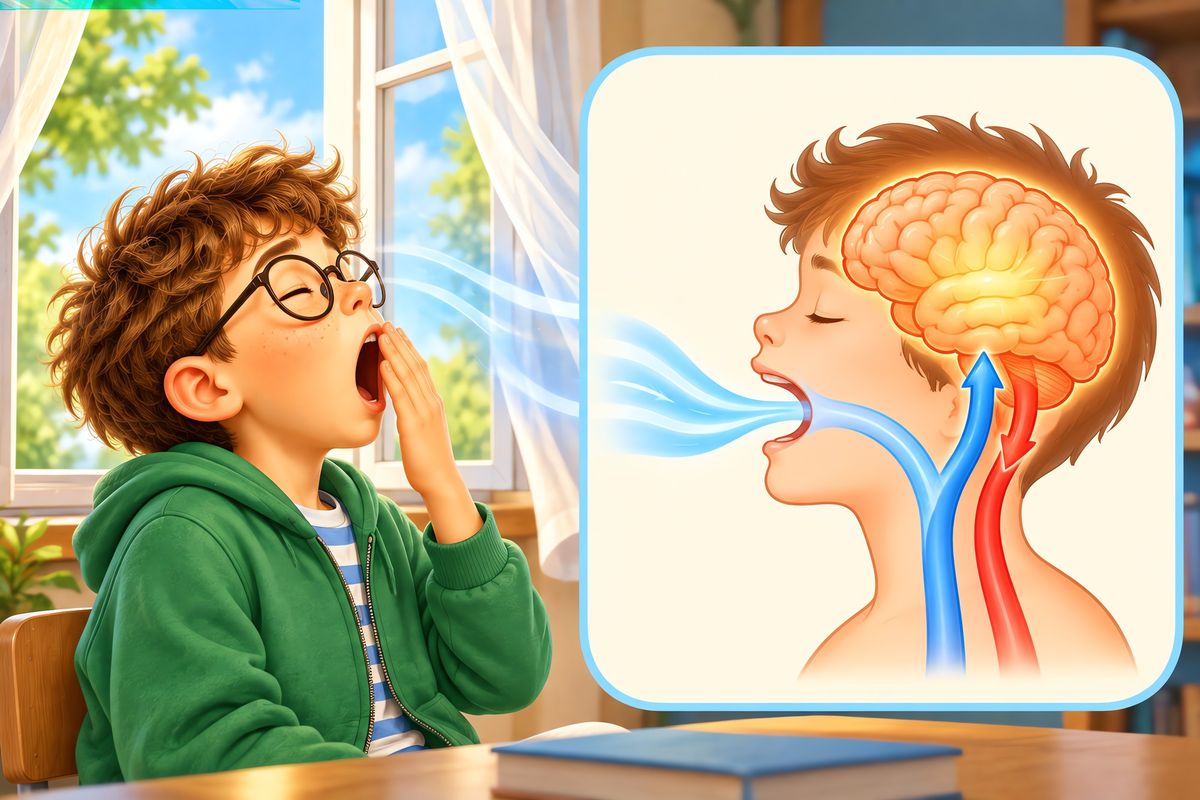
This is a good question to be honest with kids about, because the answer used to be wrong. For years, people said we yawn because our bodies need more oxygen. It sounds sensible. But when scientists had people breathe extra oxygen, they yawned just as often as before. So that idea was crossed off the list.
The newer idea comes from measuring the brain itself. Your brain works hard and warms up a little, especially when you are tired, just waking up, or bored. A yawn may be a way to cool it down.
How it works, in 3 steps
1. Your brain warms up a little. Thinking takes energy, and energy makes heat. Late in the day, or right after waking, the brain runs slightly warmer than it likes.
2. You open wide and gulp cool air. A yawn stretches your jaw muscles and pulls in a big breath. The stretch pushes warmer blood away from the brain, and the deep gulp of air cools the blood in your head and neck.
3. Cooler blood may help your brain stay alert. In one study, people who held cold packs to their foreheads yawned much less than people holding warm packs. If the brain is already cool, it seems to need fewer yawns.
Yawning is also contagious. Seeing, hearing or even reading about a yawn can set one off. (Have you yawned yet?) Scientists think that catching yawns may be linked to how we tune in to other people, which is why it shows up more in older kids and adults than in toddlers. Quick fact: babies start yawning in the womb, months before they are born.
Myth or fact?
“We yawn because our bodies need more oxygen.” Myth. Breathing extra oxygen doesn’t change how often people yawn, so oxygen is not the reason.
“Only people yawn.” Myth. Most mammals and many birds yawn, and their yawns look much the same as ours: wide mouth, deep breath, big stretch.
“Yawning only means you’re tired or bored.” Myth. People yawn right after waking up, before a big race, and while fully alert. It is a signal about your brain’s temperature, not just about sleep.
- Sit together and have one person fake a big, slow yawn with a long stretch. Wait ten seconds.
- Count how many people in the room yawn within the next minute. (Grown-ups usually catch it first.)
- Now try it again with everyone holding a cold spoon or a cold water bottle against their forehead. Fewer yawns?
Two minutes, no equipment, and your child has just repeated a real experiment. Contagious yawning is real, and cooling the forehead really does calm it down for many people.
Sources
Every fact in this article was checked against these sources, which are also listed at the back of the book:
Frontiers for Young Minds: Why do we yawn?
University at Albany (Gallup & Gallup): Yawning report
100,000 Whys for Curious Kids
This question is one of 100 in 100,000 Whys for Curious Kids by Daniel Why. Full-color illustrated encyclopedia, ages 6–13, every answer checked against real sources. A labeled diagram, three steps and three myths busted for every big question. Launching on Amazon in October 2026.
See it on AmazonFree Myth or Fact printable packMore big questions: see all the questions kids ask. Have a little one at home? The toddler and preschool edition is coming this fall.